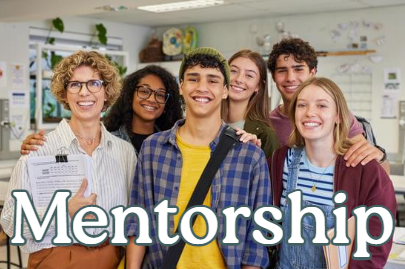

Thanks for being here. I keep thinking about how often the most meaningful things in schools aren’t loud or flashy, but steady, relational, and easy to miss if you’re not paying close attention.
Something I Keep Noticing
Lately, I’ve been noticing how often we’re asking students to stay engaged in systems that don’t always feel designed for connection.
We’re juggling academic expectations, documentation, meetings, and urgent needs. Students are navigating stress earlier, relationships more publicly, and uncertainty more constantly. Somewhere in the middle of all of that is a quiet question many of us carry: How do we make school feel like a place students belong, not just a place they attend?
Mentorship tends to sit right in that space.
Most educators and counselors know it matters. We’ve seen it work. But it can feel secondary to everything else competing for time and attention, even when our instincts tell us it’s foundational to student mental health and long-term engagement.
A Program That Stayed With Me
I recently revisited a short video highlighting mentorship work through the All-Star Foster Youth Program in Corona–Norco Unified School District. It stayed with me, not because of a single activity or resource, but because it reflected what I’ve consistently seen matter most for students: connection, consistency, and care.
As Foster Care Awareness Month comes around each May, conversations like this surface more often.
What stood out to me about this program was its intentional focus on belonging. The model centers on surrounding students with a steady community of support, with the belief that feeling connected strengthens both social-emotional well-being and academic engagement.
That framing matters. It shifts the focus away from fixing students and toward creating conditions where students can stabilize, trust, and grow.
Why This Model Works
One of the strengths of this mentorship program is that it exists at every school site without being rigid. The district provides structure, but each campus adapts the work based on student needs.
Across sites, students are offered:
- Consistent mentorship on campus
- College visits and field trips that expand their sense of what’s possible
- Academic and attendance support
- Access to resources
- Dedicated counselor office hours specifically for them
What this communicates, quietly but clearly, is: you matter enough for this to be built around you.
For students who’ve experienced instability, that message alone can be grounding.
Why This Resonated With Me
When I worked as a school counselor alongside a social worker in a wellness center, we were deeply inspired by this kind of mentorship approach. We saw how powerful it was when students could gather without the pressure of grades, discipline, or performance, and instead experience school as a place where adults were simply for them.
Our monthly group meetings focused on social-emotional learning in ways that felt approachable: emotional awareness activities, feelings bingo, conversations about friendships and healthy choices, and sometimes even music when words felt hard. We also partnered with our district liaison to organize field trips centered on mental health and student well-being, and worked to connect students with tangible supports like hygiene bags, clothing, and prom outfits, because feeling supported often starts with basic needs being met.
I also think about mentorship from my own experience as an adult. Through the ASCA mentorship program, I was paired with a counselor outside my organization, which gave me perspective beyond my own school and helped me through a particularly challenging year. That experience stays with me, and it’s part of why I believe mentorship programs in schools can be so meaningful for students, especially foster youth.
The Heart of Mentorship
At its core, mentorship isn’t about schedules or activities. It’s about relationships.
When done well, mentorship creates space for students to:
- Feel seen outside of academic performance
- Build community with peers
- Connect with counselors and social workers in non-crisis moments
- Develop trust with adults who show up consistently
That sense of belonging often becomes the foundation for everything else. Attendance improves because school feels safer. Engagement increases because students feel known. Academic growth follows when students believe someone is paying attention to more than just their grades.
What Feels True Here
When students feel connected, they’re more likely to stay engaged.
When they feel known, they’re more willing to ask for help.
And when support is woven into the fabric of a school, it becomes easier for students to imagine themselves succeeding.
That’s the quiet power of mentorship. It doesn’t always show up immediately in data, but its impact is felt over time in steady, meaningful ways.
I share reflections like this because I’ve seen how much connection can change a student’s experience of school.
If this resonated, you’re welcome to subscribe and read along as I continue writing about practices that support students and the adults who serve them. Subscribe (I promise I won’t spam you daily): Click Here
Credits: https://www.cnusd.k12.ca.us/departments/instructional_support/Student_Services/all-_star_foster_youth_program, https://vimeo.com/467814564?turnstile=0.fJ4Gyr0XLrfzMRxRrhH74rkUJSEPzU_7fGKEDIrYmTNYE8G7P9X5N5bVYnFVy06T-vFM1VdWAcTCXhxCdXELJdlU7FS84cBmtMQVgS5bpH67glP6k35Dd5D1LAgIYNtSlPxRuXemFiVIm-r1wqAKtPNzUexS14YFxr1Mh3RxcwXkjP_hrTItVLQ1n0jNi2LZBc87HGRn82y4IkW47XeVmpqT-d-MmtJyH4KcH8tK32vcmWNdyi7bjaN7cei1h6uFW5J2JCqnqIMZ9xY45AhUfsdggcFNRQM9rS5cW5AghAIILjAYudGbH9k0gnQvyLPCJQrE_G0hLSuPEwI1r2_OM6PVaz09mUogUQSSIYjUwCTPcyvOsmmRahdSC9cC-KHf3DYGAj1vnRq5nBkeb2qaHH2rGteh6ByjRDCjbom-M2UtmNwI3SgRb6MPHZ1iMSADXox2TUeTCCVYjwKOWMO8Je-AZz1EMsoanbPZKTTvJcocA2_kK2NC92wR7n6YYmYuq317ywT5PyVm5z8DLnrybjgppIWiXPsg63Od36kC9NcfiqzHxry9shI6eKv50CDP0SZbbf8pfsiapbvUvXiNzHlRjPL7hOWWF9fIYHfMjcW90uX7TeU1icb5z3B1Zs0GR2h-NsWy_iCZ6VWqvbyDjgnRSYP8DHO3eUMNpby2aT7RaGYzEiB7xy6BNcfvZvCpl8KaWuhz1dY-IsRHRNBIvcnuHrfhD1GHKfioIvo1J2VOflog0_JwCvTo9TdHHuoiQkks5S5BH-1jS34xylX2_ZKmEhzWqDS3m428Ykm8rXGkr8trKL_7xx2bsoJ6DVJEMSCthJZ3IczbjMou1QfEnNaRG9LG-kceAwRvDG-WQ9zoCmZ9Zh0FD1Aj2ncI_tnWIf7fE-uqcM7EMyvnQ2Cm5Ejg0ZXKY5gC_-2fk0Qc2cHyGxaB2UEfBDCyAd8tdx4P.4-pyvdWWzE4ijYobkIdWPQ.b42922ea28e5afd96eec298ae658c899d110be48613dc97201bffddb044ad7ef
Leave a Reply